Cancer Research in Space
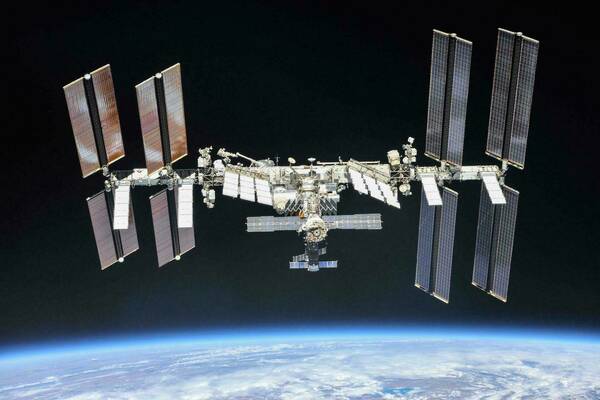
The permanent microgravity condition of the International Space Station (ISS) offers key advantages for 3-D cancer organoid development, including the ability to efficiently and rapidly generate more robust, larger, complex, uniform, and consistently reproducible spheroids that recapitulate body-based cell behavior and cell-cell interactions more accurately than ground-based 3-D models, which are subject to gravitational forces (e.g., spheroid settling, sedimentation, and disassociation, as well as heterogeneity and asymmetry. In collaboration with ISS Implementation Partners (such as Space Tango), the TIME Lab is leveraging exposure to microgravity conditions to synthesize organoids on the ISS (and future commercial space stations) and better study and target abnormal immunomechanics/mechano-immunology in glioblastoma and other diseases. As humanity rapidly increases its presence in low Earth orbit, on the Moon, on Mars, and beyond, biomedical research in space will become increasingly more relevant not only to benefit life on Earth, but also to facilitate human survival and success these new extreme environments.