Immunomechanics & Mechano-immunology
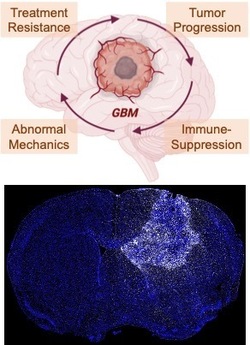
New fields of research at the intersection of tissue mechanics and immunology have emerged in recent years that are analogous to biomechanics and mechanobiology. Immunomechanics research is designed to determine and perturb the mechanical forces and resulting deformations that immune cells experience in physiological or pathophysiological settings, as well as the mechanical forces that immune cells themselves can exert. Mechano-immunology examines how tissue mechanics affect immune cell phenotype and function. Because mechanopathologies are a hallmark of solid tumors, we study the impact of mechanical properties and forces on pro-tumor and anti-tumor immune responses within and surrounding the tumor microenvironment. We utilize multi-scale models and tools to either measure or apply mechanical forces from the single-cell level up to tissue length scales in cell cultures, 3-D organoids, organotypic tissue slices, and mouse models of cancer. By revealing and targeting these mechanical- and immune-related vulnerabilities – e.g., with FDA-approved agents repurposed for rapid translational potential – we can re-engineer the tumor microenvironment to sensitize it to anti-cancer treatment such as immunotherapy.